Water-Based Rust Preventive: Rust Protection Without Oily Residue
A water-based rust preventive is a non-oily, non-flammable, VOC-free corrosion inhibitor that forms a thin protective film on machined metal parts after the water portion evaporates. Used at 10-20% concentration, it gives short-term rust protection of 15 days to about a month indoors without leaving oily residue, so parts go directly to inspection, assembly or packing without a degreasing step.
Introduction
Rust is a common problem in engineering, automotive, precision component, hydraulic, fabrication and assembly industries. A metal part may be freshly machined, cleaned and ready for dispatch, but if it is kept open for a few days, rust marks can start appearing.
This usually happens during in-process storage, inspection, inter-plant movement, transport or before final assembly. Even a small rust mark can lead to rework, rejection, customer complaints and dispatch delays.
Traditionally, many companies use rust preventive oil or solvent-based rust preventives for metal protection. These products work well for long-term protection, but they may leave oily residue, require solvent cleaning before assembly and increase handling cost.
Today, due to the sharp rise in oil and solvent prices, many industries are looking for a cleaner and more cost-effective option. In some cases, oil and solvent-based rust preventive costs have increased by 3-4 times. For companies that only need short-term protection, this becomes an unnecessary cost burden.
This is where a Water-based rust preventive from Victory Polychem, becomes useful.
It gives temporary rust protection without making the component oily and it supports clean handling during storage, inspection, movement and assembly waiting time.
What Causes Rust on Metal Parts?
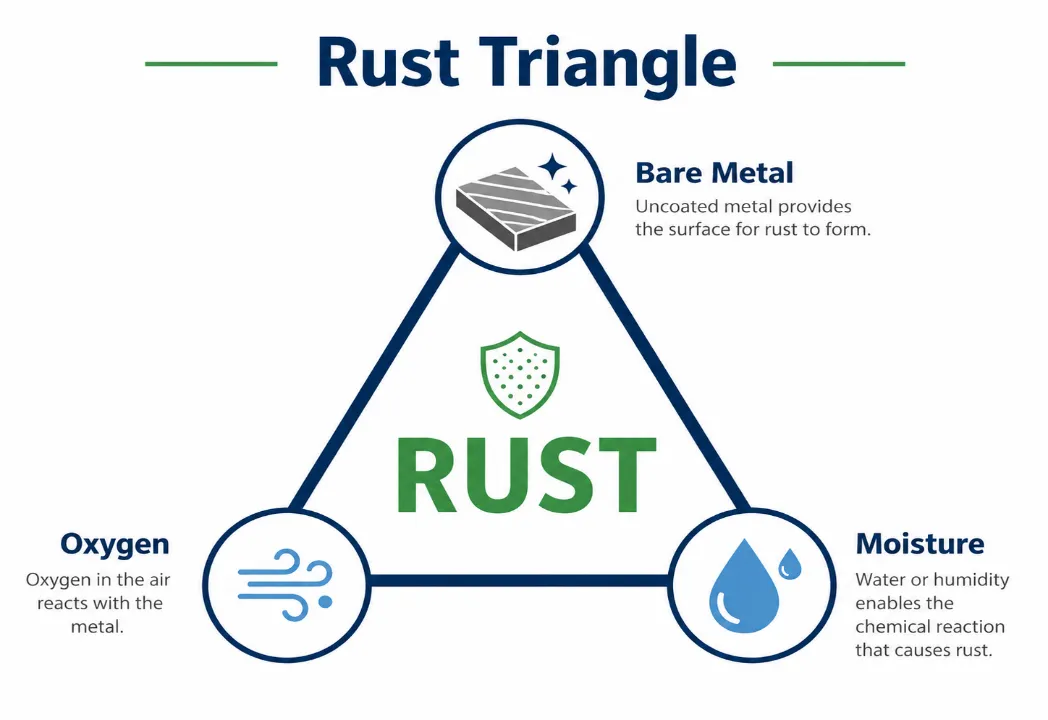
This is often called the rust triangle. If all three are present, corrosion can start. If one of them is blocked, rusting can be reduced.
In real plant conditions, rust can happen because of humidity, monsoon moisture, water droplets after washing, fingerprints, chloride in water, poor drying or long waiting time between processes.
A good rust preventive, anti-rust chemical, or corrosion inhibitor works by creating a protective layer on the metal surface. This layer reduces direct contact between the metal, oxygen and moisture.
An iron gate outside a house starts rusting when rainwater, air and bare metal remain in contact. The same thing happens with industrial components, only faster because freshly machined surfaces are more exposed.
How Does a Water-Based Rust Preventive Work?
Many people ask one simple question: If water causes rust, how can a water-based rust preventive stop rust?
The answer is in the chemistry. A water-based rust preventive is not just water. It contains corrosion-inhibiting ingredients that form a thin protective layer after drying. This layer may include water-soluble waxes, vegetable oil esters, thin-film emulsifiers, VCI-based components and other protection chemistry depending on the formulation.
Once applied, the water portion evaporates. The remaining protective film works like a barrier between the metal and the environment. It helps reduce the contact of oxygen and moisture with the metal surface.
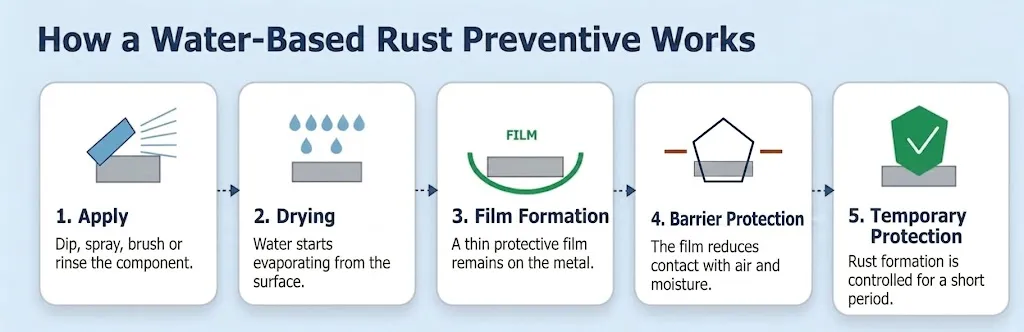
When the component is dipped, dried and sealed properly, VCI (Vapor Corrosion Inhibitor) protection can support rust prevention for a longer period. In suitable conditions, it can support protection up to 4-5 weeks, depending on packing quality, sealing, storage condition and handling.
But the bag must remain sealed. If the plastic bag is opened, torn or pierced, the VCI protection can escape and protection life may reduce.
"When solvent and oil prices went up three to four times, customers who only needed two weeks of indoor protection started asking us a simple question — why am I paying for a long-term oil film I will only have to clean off again? Water-based chemistry was the honest answer." — Mr. Ameeth Kkaulgud, Technical Director, Victory Polychem
Simple Way to Understand the Technology
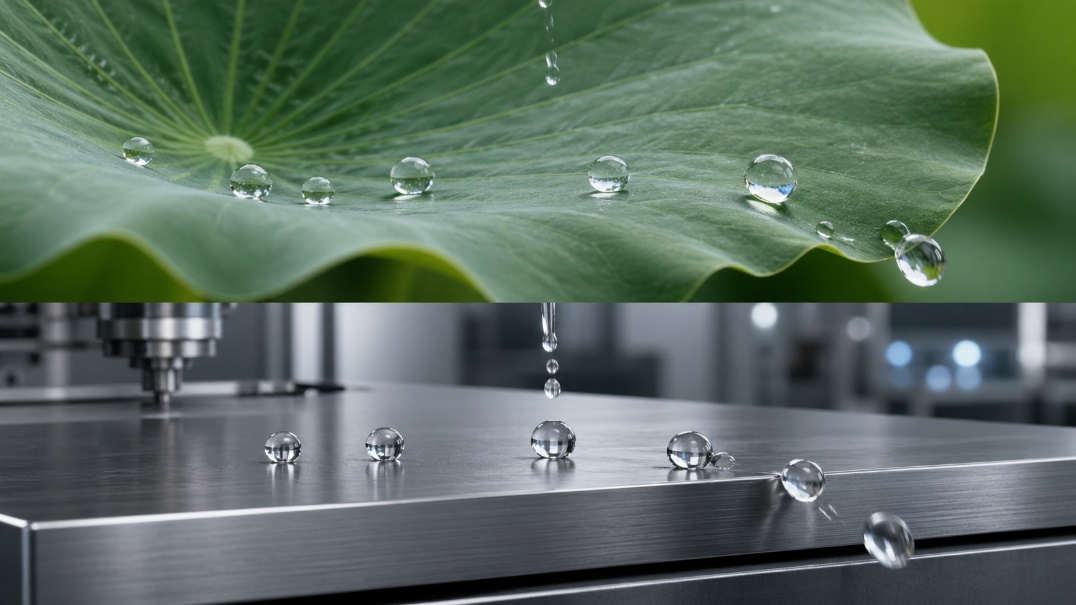
A useful way to understand this technology is the lotus effect.
When water falls on a lotus leaf, it does not spread and stay there. It rolls away. The surface does not allow water to stick easily.
A water-based rust preventive uses a similar concept in an industrial way. The formulation creates a very thin, almost invisible waxy film on the metal surface. This film helps moisture slide away and reduces direct contact with the metal.
This does not mean it performs like nature in every condition. A lotus leaf can face rain many times. A water-based protective film is more limited. That is why it is called a temporary rust preventive, not a permanent outdoor coating.
Why Industries Are Moving Towards Water-Based Rust Preventives
Many industries today are looking for cleaner and safer alternatives to conventional oil-based or solvent-based rust preventives.
One major reason is cleanliness. In many applications, parts need to remain clean for inspection, assembly, packing, coating or customer dispatch. If the part has an oily layer, it may need extra cleaning before the next process.
Another reason is cost. Oil and solvent-based rust preventives may offer strong protection, but they can also increase solvent cleaning, handling, disposal and shop floor safety concerns.
A water-based rust preventive helps reduce these problems when the requirement is short-term and indoor. It supports clean protection without overusing oil-based products where heavy protection is not required.
Water-based rust preventive protects the part without making it oily.
Water-Based vs Oil-Based: Quick Comparison
| Parameter | Water-Based Rust Preventive | Oil-Based Rust Preventive |
|---|---|---|
| Surface feel | Clean and non-oily | Oily or greasy |
| Best use | Short-term indoor protection | Long-term or harsh protection |
| Cleaning before assembly | Lower cleaning effort | May need degreasing |
| Protection film | Thin protective film | Strong oil film |
| Main advantage | Clean temporary protection | Longer protection |
If the component needs long-term outdoor protection, open yard storage, sea shipment or heavy moisture exposure, an oil-based or solvent-based rust preventive may still be the better choice.
Water-based rust preventive is best for short-term corrosion protection, indoor storage, clean assembly parts, machined parts, precision components, hydraulic parts, electrical panels and parts where oily residue is not acceptable.
Application and Protection Details
For normal temporary protection, 10% concentration is commonly recommended. If longer protection is required, the concentration may be increased to 20%, depending on storage condition, humidity, packing method and customer requirement.
In normal indoor or transit conditions, a water-based rust preventive can support protection for around 15 days to 1 month. For complex components, dipping is often preferred because it covers corners, grooves, internal areas and critical mating surfaces more evenly.
Common applications include:
-
Parts moving from one plant to another
-
Components waiting for inspection
-
Machined parts kept before dispatch
-
Hydraulic or pneumatic parts before assembly
-
Semi-finished components kept in storage
For such applications, A water based rust preventive can give clean short-term protection without making the component oily.
How to Choose the Right Water-Based Rust Preventive
Before selecting a water-based rust preventive, companies should check a few important points:
-
Which metal needs protection?
-
Is the part ferrous or non-ferrous?
-
How many days or months of protection are needed?
-
Is the part stored indoors or outdoors?
-
Will the part be packed or kept open?
-
Is oily residue acceptable or not?
-
Will the part go directly for assembly?
-
Is water washability required?
-
What is the humidity level in the plant?
-
Will the part travel between plants or to a customer location?
The answer to these questions helps decide whether a water-based rust preventive is suitable or whether an oil-based product is required.
Key Benefits of Water-Based Rust Preventive
-
Clean and oil-free surface
-
Water washable when required
-
Less solvent cleaning before assembly
-
Safer shop floor handling, as many are non-flammable and VOC-free
-
Suitable for ferrous and non-ferrous parts depending on application
-
Useful for clean assembly parts, valves, actuators, hydraulic lines, fittings, panels and precision parts
-
Cost-effective where long-term oil protection is not needed
Victory Polychem’s Approach
For clean, short-term, oil-free rust protection, Victory Polychem offers POLYANTICORR, a water-based rust preventive solution for temporary corrosion protection. It is oil-free, solvent-free, non-flammable, VOC-free and suitable for indoor shop floor conditions.
For normal temporary protection, 10% concentration is recommended. If longer protection is required, concentration can be increased to 20%, depending on storage condition, humidity, packing method and customer requirement.
In normal indoor or transit conditions, POLYANTICORR can support protection for around 15 days to 1 month, depending on application. With proper drying and sealed VCI packing, longer protection can be achieved.
Need Clean Rust Protection for Your Metal Parts?
If your components are facing rust during storage, inspection, inter-plant movement, dispatch or sealed packing, choosing the right rust preventive can reduce rework, rejection and unnecessary cleaning cost.
Frequently Asked Questions
Can POLYANTICORR be used on both ferrous and non-ferrous components?
Yes, depending on the application. The chemistry is designed for ferrous parts where short-term indoor protection is the main requirement. For non-ferrous components such as brass, aluminium or copper fittings, run a compatibility trial first. Always confirm the metal type, surface finish and downstream process (assembly, plating, painting) before standardising the concentration.
How long does protection last and what happens when the sealed bag is opened?
In normal indoor or transit conditions, POLYANTICORR supports protection for around 15 days to one month at 10% concentration. With proper drying and sealed VCI packing, protection can extend further. But the bag must stay sealed. Once the plastic is opened, torn or pierced, the VCI vapour escapes and protection life drops sharply. For longer protection, increase concentration up to 20%, dry the part fully before packing, and use intact VCI bags.
When should we still use an oil-based or solvent-based rust preventive instead?
Use oil-based or solvent-based products when the component needs long-term outdoor protection, open yard storage, sea shipment or exposure to heavy moisture. The water-based chemistry is built for clean, short-term, indoor and inter-plant protection where an oily film would have to be cleaned off again before the next operation. Match the chemistry to the actual storage condition and the next process, not just to the cost per litre.
Conclusion
Rust prevention should match the actual need. If a component needs long-term outdoor protection, oil-based rust preventive may still be the right choice. But when the requirement is clean, cost-effective protection without oily residue, a water-based rust preventive is a better option.
It helps protect metal parts during storage, inspection, transit, assembly waiting time and sealed packing without creating a heavy oily layer.
Want to know whether a water-based rust preventive is suitable for your application? Connect with Victory Polychem for product guidance, concentration recommendation and trial support.